
What is Forex Trading?
Forex (Foreign Exchange) is the market where currencies are bought and sold. Traders earn profits by predicting how currency pairs (like EUR/USD or GBP/JPY) will move in value.
Steps to Start Forex Trading as a Beginner
1. Learn the Basics First
- Understand what currency pairs are (e.g., USD/JPY = US Dollar vs Japanese Yen).
- Learn common terms: Pips, Spread, Leverage, Margin, Lot size.
- Understand that Forex trading is risky and not guaranteed profit.
2. Choose a Reliable Broker
- Select a regulated broker (check licenses from FCA, CySEC, ASIC, etc.).
- Look for low spreads, good trading platform (like MT4/MT5), demo account, and secure deposits/withdrawals.
3. Practice on a Demo Account
- Never start with real money.
- Use a demo account to learn trading strategies without risk.
- Treat demo trading seriously as if it were real money.
4. Start Small with Real Account
- Begin with a small investment you can afford to lose.
- Use micro lots (small trade sizes) to reduce risk.
- Avoid using high leverage (risk multiplies with leverage).
5. Learn a Trading Strategy
Some simple beginner-friendly strategies:
- Trend Following: Trade in the direction of the market trend.
- Support & Resistance: Buy near support, sell near resistance.
- Breakout Trading: Trade when price breaks out of a key level.
6. Risk Management is Key
- Never risk more than 1–2% of your account on a single trade.
- Always use Stop-Loss orders.
- Avoid overtrading—quality over quantity.
7. Keep Learning
- Follow economic news (interest rates, inflation, global events).
- Use Forex calendars to track important events.
- Read books, watch tutorials, and join trading communities.
⚡ Pro Tips for Beginners
- Start with major pairs (EUR/USD, GBP/USD, USD/JPY) because they are more stable.
- Don’t chase quick profits.
- Keep a trading journal to track your wins, losses, and mistakes.
- Stay patient and disciplined—Forex is not a “get rich quick” scheme.
📌 Forex Beginner Roadmap – Step by Step
Phase 1 – Learn the Basics (Week 1–2)
✅ Understand what Forex is (currency pairs, pips, lots, spread, leverage).
✅ Learn trading platforms (MT4 / MT5 or broker app).
✅ Watch beginner tutorials & read free guides.
✅ Study major currency pairs (EUR/USD, GBP/USD, USD/JPY).
Phase 2 – Setup & Practice (Week 2–3)
✅ Open a demo account with a regulated broker.
✅ Learn to place buy/sell orders, set Stop-Loss (SL) and Take-Profit (TP).
✅ Practice with small demo trades daily.
✅ Start keeping a trading journal (note entry, exit, result, and lessons).
Phase 3 – Strategy Development (Week 3–5)
✅ Pick one simple strategy (Trend following, Support/Resistance, or Breakout).
✅ Backtest your strategy on historical charts.
✅ Trade only your chosen strategy (don’t jump to 10 methods at once).
✅ Record results to see if your method works.
Phase 4 – Real Trading (Month 2–3)
✅ Open a real account with small money (only what you can afford to lose).
✅ Start with micro lots (0.01 lot size).
✅ Risk only 1–2% per trade.
✅ Avoid using high leverage (keep it low).
✅ Trade major pairs only until you gain confidence.
Phase 5 – Grow & Improve (Ongoing)
✅ Study Forex news & economic calendar (interest rates, GDP, inflation).
✅ Improve risk management (don’t overtrade).
✅ Learn advanced strategies (Price Action, Indicators, Risk-Reward ratio).
✅ Join trading communities & forums to learn from others.
✅ Review your journal weekly → adjust mistakes → grow slowly.



Golden Rules for Beginners
- ❌ Don’t trade with borrowed money.
- ❌ Don’t chase losses (never revenge trade).
- ✅ Be patient → Forex takes time to master.
- ✅ Focus on consistency, not quick profit.
Why Forex Trading is Best
✅ 1. World’s Largest Market
- Forex is the biggest financial market in the world, with $7+ trillion traded daily.
- High liquidity means you can enter or exit trades instantly without waiting.
✅ 2. Open 24 Hours, 5 Days a Week
- You can trade anytime (day or night) because Forex runs across global markets (Asia, Europe, America).
- Perfect for people who want to trade part-time.
✅ 3. Low Starting Capital
- You don’t need huge money to start.
- Some brokers let you begin with as little as $10–$100.
- You can trade micro lots (small trade sizes).
✅ 4. Leverage Power
- Brokers offer leverage (e.g., 1:50, 1:100).
- This allows you to control bigger positions with small money.
⚠️ But remember: leverage increases both profit and risk.
✅ 5. High Profit Potential
- Forex moves every second due to global news, politics, and economics.
- These movements create many profit opportunities daily.
✅ 6. Easy Access & Technology
- All you need is a laptop or even a smartphone with internet.
- Platforms like MT4/MT5 are beginner-friendly.
✅ 7. Many Learning Resources
- Thousands of free courses, tutorials, demo accounts, and communities are available.
- You can practice for free before risking real money.
✅ 8. Global & Decentralized
- No single government or company controls Forex.
- It’s a decentralized, global market, so it’s always moving.
⚠️ Reality Check
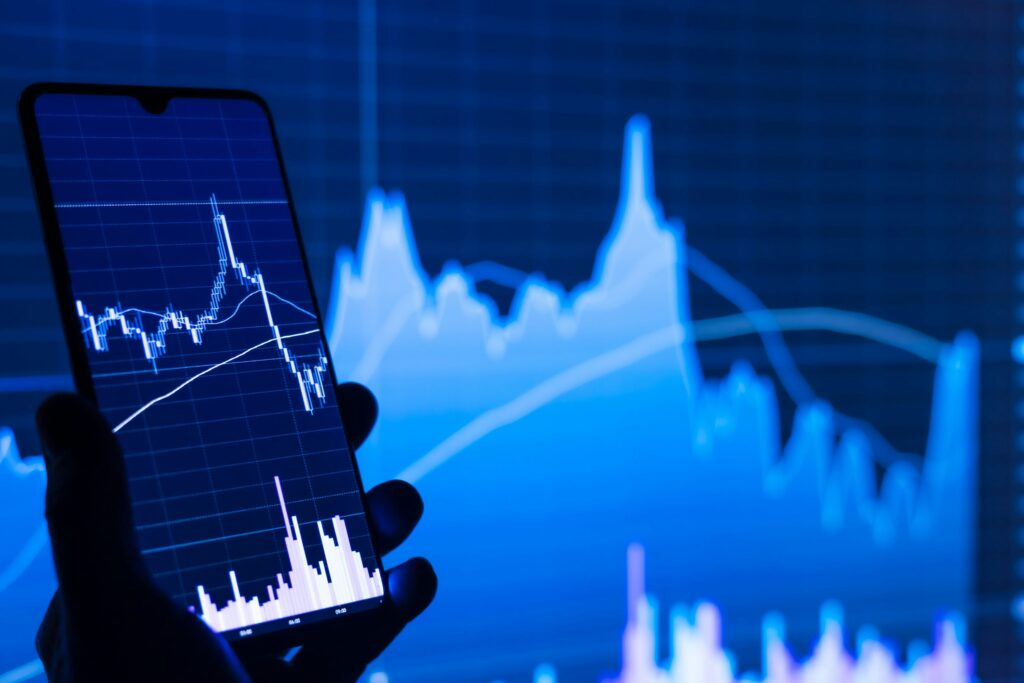
- Forex is not a get-rich-quick scheme.
- Over 70% of beginners lose money because of lack of knowledge and poor risk management.
- Discipline, patience, and risk control are the real keys to success.
Age of Forex Trading
🔹 Ancient Times (Thousands of Years Ago)
- Currency exchange started over 2,000 years ago when people traded gold, silver, and coins in markets.
- Early merchants in Babylon, Egypt, and Greece exchanged one currency for another to trade goods.
🔹 Gold Standard Era (1870s – 1914)
- In the 19th century, countries fixed their currency value to gold (the “Gold Standard”).
- This was an early form of international exchange rates.
🔹 Bretton Woods Agreement (1944 – 1971)
- After World War II, major countries created the Bretton Woods system.
- Currencies were tied to the US Dollar, and the Dollar was tied to gold.
- This system collapsed in 1971, when the US ended the gold standard.
🔹 Modern Forex Market (1970s – Today)
- After 1971, currencies became free-floating (their value was set by supply and demand).
- The modern Forex market officially started in the 1970s.
- At first, it was only for banks, governments, and big corporations.
🔹 Retail Forex Trading (1990s – Present)
- With the rise of the internet in the 1990s, Forex trading became available to ordinary people.
- Online brokers launched platforms like MetaTrader (MT4 in 2005, MT5 in 2010).
- Today, anyone with a computer or phone can trade Forex.
📌 So, How Old is Forex?
- Currency exchange history → 2,000+ years old.
- Modern Forex market → about 50 years old (since 1970s).
- Online retail Forex trading → about 25–30 years old (since 1990s).
World’s No. 1 Forex Trader
🧑💼 George Soros
- Known as “The Man Who Broke the Bank of England.”
- In 1992, he made $1 billion profit in a single day by short-selling the British Pound during the UK currency crisis (called Black Wednesday).
- This trade is one of the most legendary in financial history.
🔥 Other Legendary Forex Traders
- Stanley Druckenmiller – Worked with Soros, also a billionaire trader.
- Bill Lipschutz – Known as “Sultan of Currencies,” turned $12,000 into millions.
- Andrew Krieger – Famous for shorting the New Zealand Dollar in 1987.
- Paul Tudor Jones – Successful hedge fund manager who traded currencies and futures.
📌 Final Answer
👉 The World’s No. 1 Forex Trader is George Soros, because of his historic $1 billion profit trade in 1992.
Thank you for your sharing. I am worried that I lack creative ideas. It is your article that makes me full of hope. Thank you. But, I have a question, can you help me?